Brigit: Cash Advance & Credit
- 4.8
- Rating
- 10.00M
- Installs
- Free
- Price

 Analysis by App-foxy
When an unexpected bill lands between paydays, the real question is not simply whether a cash advance app can send money quickly. I want to know whether it fits my regular budget, whether its credit-building and saving tools are useful beyond the emergency, and whether the overall experience is easier to manage than the alternatives. That is the lens I used with Brigit: Cash Advance & Credit, a free finance app from Brigit.
My impression is that Brigit is most interesting when you treat it as a short-term money-management companion rather than a permanent replacement for an emergency fund. It brings several financial tasks into one place: accessing an advance, working toward credit improvement, considering personal loans, and setting money aside. That combination gives it a broader role than a basic budgeting app, although it also means you need to pay attention to which part of the service you are using and what it means for your own finances.
How I Decide Whether Brigit Is Worth Using
I would begin with the problem I am trying to solve. If I only need to see my spending, a traditional budgeting app may be simpler. If I need a long-term loan, a bank or credit union may offer a more suitable process. Brigit makes the most sense when the need is immediate and modest, while I also want tools that can help me organize the next few pay cycles instead of repeatedly reacting to them.
You May Also Like

 Blood Strike: 2.5 Anniversary
Blood Strike’s Loadouts Turn Every Drop Into a Tactical Gamble
A close look at Blood Strike’s custom loadouts: how fast access to signature weapons reshapes its battle royale rhythm, rewards preparation, and narrows the gap between fights.

 Pandora - Music & Podcasts
Pandora’s Music Is Easy to Start, but Harder to Recover
Pandora’s strength is its low-effort path from a seed to a station. Its weak spot is how much confidence it asks you to place in connection, setup, and quiet recovery.

 8 Ball Pool
 Is Built on Rivalries, Rematches, and Routine
A close look at the rivalries, rematches, shared routines, and unanswered safety questions that turn a quick pool match into a persistent mobile community.

 Samsung Music
’s Quiet Strength Is Playing What You Already Own
Its reach comes less from spectacle than from dependable access to a personal library. That simplicity is both the app’s strongest retention engine and its ceiling.

 AccuWeather: Weather Radar
AccuWeather Review: A Quick, Clear Forecast for Everyday Decisions
For everyday plans, the best forecast is the one you can understand quickly. AccuWeather makes rain timing, radar, and local conditions easy to act on, with a few trade-offs.

 Hill Climb Racing
Why Hill Climb Racing Still Turns Crashes Into One More Run
A tiny car, a bumpy hill and one more upgrade: Hill Climb Racing keeps resurfacing because its simple chaos makes every near-miss feel personal.
More From Our News Desk



The app is free to install, has an Everyone content rating, and supports devices running Android 8.1 or later. It was released on April 16, 2018, and the current version is 1086.0. Those details matter in practical terms: this is an established finance product rather than a newly launched experiment, but I would still keep the app updated and use a device with current security protections before connecting financial accounts.
Brigit has a 4.8 average from around 337 thousand ratings, with roughly 44 thousand written reviews and over five million installs. Those figures suggest that many people find the app useful, but popularity should not substitute for checking the terms and deciding whether a cash advance belongs in your budget. A highly rated app can still be the wrong choice if your income is irregular or if you are already relying on advances every pay period.
The developer is Brigit, and the app’s central appeal is the way it combines several money tasks. Instead of opening one app for spending awareness, another for saving, and a separate service when cash is tight, I can start with one financial dashboard. That convenience is valuable, but convenience can also make borrowing feel less significant than it really is. I would use the app with a clear repayment plan, not as permission to spend money that is already committed elsewhere.
The everyday situation where it feels most useful
Imagine that I have a utility payment due before payday and my checking balance is temporarily short because a grocery purchase and a transport expense arrived in the same week. In that situation, I would first review the account activity and upcoming obligations, then decide whether an advance solves a genuine timing problem or merely postpones a larger shortage. If the problem is timing, Brigit’s cash-advance focus can be more relevant than a general budgeting app.
The important distinction is between a one-off gap and a recurring deficit. A one-off gap may be manageable if my next paycheck covers the advance and the rest of my planned spending. A recurring deficit means the underlying budget needs attention. I found this to be one of the most useful ways to think about the app: it can help bridge a short distance, but it cannot make an income-and-expense mismatch disappear.
What I would check before requesting money
Before using the advance feature, I would review the amount needed rather than automatically taking the largest available option. I would also map out the next paycheck: rent, utilities, food, transportation, subscriptions, and the advance itself. This simple exercise exposes a trade-off that is easy to miss in a fast-moving app. Receiving money today can reduce immediate stress while leaving less flexibility later.
I would also separate urgent essentials from convenience spending. A necessary prescription, a late bill that could trigger a problem, or a short delay in payroll is a different situation from buying something that can wait. Brigit is easier to use responsibly when I decide the purpose first and open the app second.
Credit and saving are not the same job
The credit-building side appeals to me because it points beyond the immediate emergency. Still, I would not assume that opening a finance app automatically improves my credit position. Credit-related tools deserve the same careful reading as any other financial product: I want to understand what action I am taking, what obligations come with it, and how it fits my broader credit plan.
The saving tools are similarly useful as a habit-building layer, especially if I struggle to keep emergency money separate from everyday spending. My practical tip would be to use saving as a destination for small, repeatable amounts rather than treating it as a dramatic fix. Even a modest reserve can reduce the need to request an advance the next time a bill arrives early.
Personal loans are a different decision from a short-term advance. If I need money for a larger, planned expense, I would compare the repayment schedule and total cost with offers from a bank, credit union, or established lender. Brigit’s presence of several financial options in one app is convenient, but the convenience should not stop me from comparing the product that actually matches the size and duration of the need.
Where Brigit Wins and Where Another Option May Fit Better
Brigit’s strongest point is integration. I can approach a cash shortage, credit goals, borrowing, and saving from the same finance-focused environment. For someone who wants a single starting point, that is more practical than juggling several unrelated services. I also like that the app’s purpose is immediately clear: it is built around helping people handle short-term cash pressure while thinking about broader financial stability.
It is particularly well suited to a person with predictable income who occasionally experiences timing problems. In that case, an advance may function as a bridge between a due date and a paycheck, while the saving and credit features encourage better preparation. The app can also suit someone who wants a more guided financial routine than a spreadsheet provides, without beginning with a complex investment platform or a full banking replacement.
Another non-obvious strength is the opportunity to use the app as a decision checkpoint. Instead of treating the request button as the first step, I can use the surrounding money tools to ask why the shortage happened. Was it an unusual expense, a forgotten annual bill, or a pattern of overspending? That reflection is where the app becomes more valuable than a simple source of quick cash.
There is also a useful workflow for people who often lose track of small obligations. I would review my upcoming commitments, reserve money for essentials, and then direct any realistic leftover amount toward savings. If a cash advance is still necessary, I would take only what closes the gap. This sequence reduces the chance that the app becomes a reflex whenever my balance looks uncomfortable.
However, Brigit is not automatically the best choice for everyone. A person with highly irregular income may find a short-term advance difficult to manage because the next repayment can arrive during another weak period. Someone carrying expensive existing debt may benefit more from speaking with a nonprofit credit counselor or negotiating bills than from adding another financial obligation.
A conventional budgeting app may be better when visibility is the main goal and borrowing is not needed. A bank account with built-in savings tools may be preferable for someone who wants fewer financial relationships and already has reliable overdraft protection or an emergency reserve. For a larger expense, a personal-loan comparison process may be more appropriate than a cash-advance workflow.
I would also skip Brigit if I am looking for investing, detailed tax preparation, or a complete business-finance system. Its appeal is concentrated around everyday personal cash flow, credit-related goals, saving, and access to borrowing. Choosing it for a purpose outside that lane would create unnecessary friction.
The trade-off behind convenience
The more financial functions an app brings together, the more carefully I need to read each screen. A user can easily focus on the immediate benefit and overlook the longer-term effect on the next budget cycle. My advice is to slow down at the point where money moves: confirm the amount, understand the repayment expectation, and check whether the action supports the bill plan I already made.
I would also avoid measuring success by how often I can access an advance. A better measure is whether I need advances less often over time. That is where the saving and credit-oriented parts can matter. If they help me build a cushion and become more deliberate about borrowing, the app is serving a constructive purpose. If they merely make repeated shortfalls easier to cover, the convenience is working against me.
What changing to Brigit involves
Switching from a basic budgeting routine to Brigit is not just a download decision. I would need to set aside time to understand the app’s financial workflow, review the information it requests during setup, and decide which features I actually intend to use. Connecting financial information can make the experience more useful, but it also means I should be comfortable with the account access and privacy choices presented during onboarding.
The cost of switching is therefore mostly attention and discipline rather than installation. I would not activate every available feature immediately. I would begin with the area that solves my current problem, such as organizing cash flow, and then evaluate whether saving or credit tools genuinely add value. This staged approach makes it easier to notice which parts help and which parts simply create more activity.
I would keep my old budgeting method for at least one full pay cycle while learning Brigit. That gives me a reference point and prevents a rushed migration from hiding mistakes. Once I trust the way I am tracking obligations, I can simplify the old system. If the app does not make my financial decisions clearer, there is no reason to abandon a spreadsheet, bank tool, or other method that already works.
One practical question many people have is whether the app is suitable for occasional use. In my view, yes, provided the advance is tied to a specific short-term need and the next repayment is already accounted for. Occasional use is very different from depending on the service to cover ordinary living costs. The latter is a signal to address income, expenses, or debt with a broader plan.
Another question is whether the free price makes it risk-free. It does not. Free installation removes one barrier to trying the app, but financial products can still involve obligations or costs depending on the feature and the terms shown to the user. I would inspect the details before accepting an advance or loan, and I would never judge the decision solely by the download price.
For someone concerned about age suitability, the Everyone rating means the app is presented for a broad audience. That does not mean every financial feature is appropriate for every person. I would still make sure the user understands borrowing, repayment, account security, and the consequences of missing a financial commitment.
My recommendation for different kinds of users
I recommend Brigit to a financially organized adult who occasionally needs help smoothing a predictable gap between income and bills. The best match is someone willing to use the app’s saving and credit-oriented tools as part of a longer-term improvement plan, not just someone searching for instant cash. For that user, the combination of functions can be genuinely convenient.
I would recommend a cautious trial for someone who wants to improve money habits but has never used a finance app with borrowing features. Start with awareness and saving, read every relevant condition, and do not request an advance until the repayment fits comfortably. That approach lets the app prove its value without making borrowing the center of the experience.
I would steer someone with persistent shortages, unstable income, or substantial debt toward alternatives first. A conversation with a lender, counselor, employer, or trusted financial professional may address the cause more effectively. Brigit can be part of a recovery plan for some people, but it should not be mistaken for debt relief or a substitute for sustainable income.
Overall, I see Brigit as a focused personal-finance app with a useful middle ground between a plain budget tracker and a traditional lending process. Its free entry point, broad financial toolkit, and strong user response make it worth considering. The deciding factor is not how quickly it can help me access money; it is whether I can use that help without damaging the next part of my budget.
My clear recommendation: try Brigit when your problem is a temporary cash-flow mismatch and you are prepared to plan the repayment before requesting anything. Use the saving and credit features to reduce future dependence, compare larger borrowing needs with conventional alternatives, and leave the app aside if advances are becoming part of your normal monthly income. Used with that discipline, it can be a practical financial companion rather than another source of financial pressure.
FAQs for Brigit: Cash Advance & Credit
01What is Brigit and how does it work?
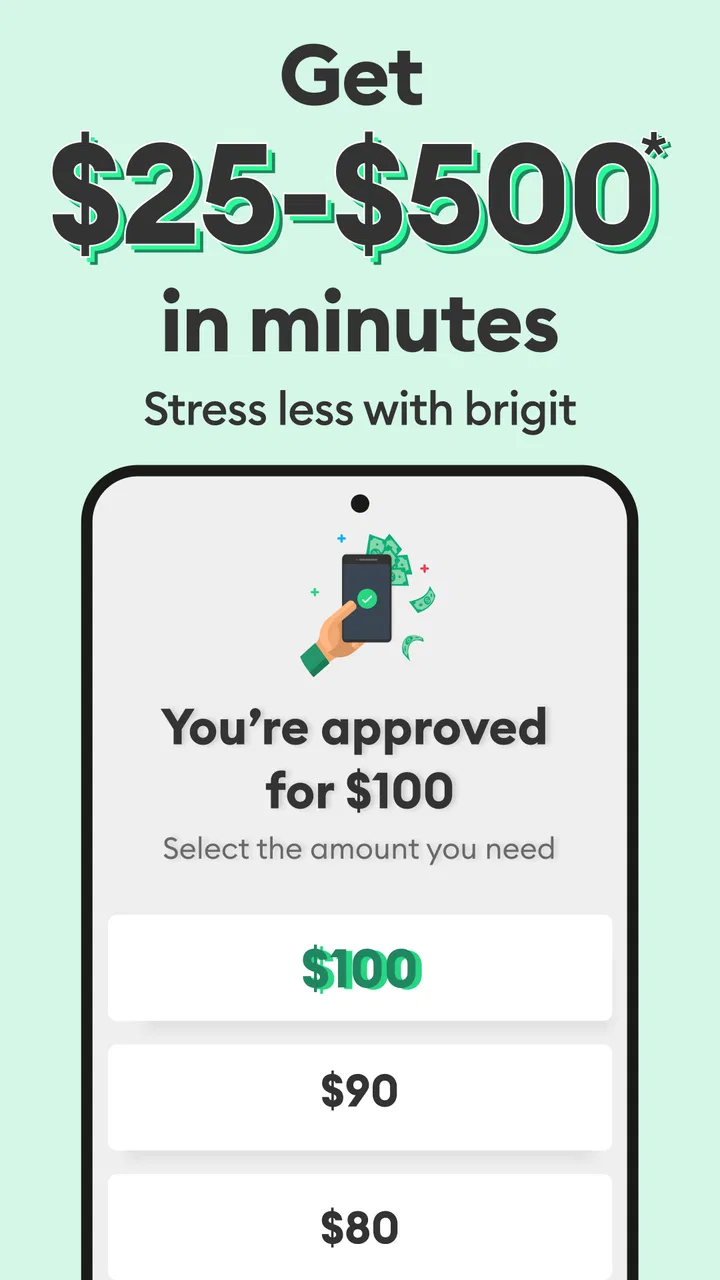
Brigit is a financial app designed to help users manage their personal finances by offering cash advances and credit-building tools. The app analyzes your spending patterns and predicts future expenses to provide cash advances up to $250 when you're running low, without any hidden fees or interest. Additionally, Brigit offers credit-building services to help improve your credit score.
02Is Brigit safe to use for my financial information?
Yes, Brigit employs bank-level security measures to protect your financial information. The app uses 256-bit SSL encryption and other security protocols to ensure that your personal data remains confidential and secure. Brigit also adheres to industry compliance standards to provide users with a safe experience.
03How much does it cost to use Brigit?
Brigit offers a free version for basic services, but the full range of features, including larger cash advances and credit monitoring, is available through a subscription model. The monthly subscription fee is $9.99, which includes access to all premium features designed to help users manage their finances effectively.
04Can I use Brigit if I have a bad credit score?
Yes, Brigit is designed to be accessible to users with various credit scores. The app does not perform a credit check for providing cash advances, making it a helpful tool for individuals with lower credit scores. Additionally, Brigit offers credit-building services to help users improve their credit over time.
05What are the requirements to qualify for a cash advance from Brigit?
To qualify for a cash advance, you must have a checking account that receives a consistent income from direct deposits. Brigit analyzes your income and spending patterns to determine eligibility. Typically, users need to have a certain number of transactions per month and a minimum income level to qualify for advances.
Pros
- Quick cash advances when needed
- No credit check required for advances
- Useful budgeting tools included
- Alerts for potential overdrafts
- User-friendly interface
Cons
- Limited to $250 cash advance
- Monthly subscription fee required
- Not available outside the US
- Requires access to bank account
- No interest-free options

Brigit: Cash Advance & Credit
Gallery